-
Welcome & Lunch
Sep. 03
-
[Keynote] Operating at the Edge of Chaos: The CISO Lessons the War Forced Upon Us
Olivier BusoliniSep. 03
-
[Panel Discussion] The Era of "Agentic" AI
Anna MempelSep. 03
-
Coffee Break
Sep. 03
-
Compliance on Autopilot: From Policies to Auditable AI Controls – A Practical Approach Using AI Agents & SSDLC
Thomas PunzSep. 03
-
Generative AI [Working Title]
Konstantin GrafSep. 03
-
Coffee Break
Sep. 03
-
[Masterclass] 100 Days to Credibility: How New CISOs Build Trust, Culture, and Strategic Impact
Olivier BusoliniSep. 03
-
[Masterclass] Plug, Play, Exploit: Mastering Modern Hardware Attacks
Tobias ScheibleSep. 03
-
Apéro
Sep. 03
Event SECURinsights 2026
starts on
Sep 3, 2026, 12:00:00 PM
(Europe/Berlin)
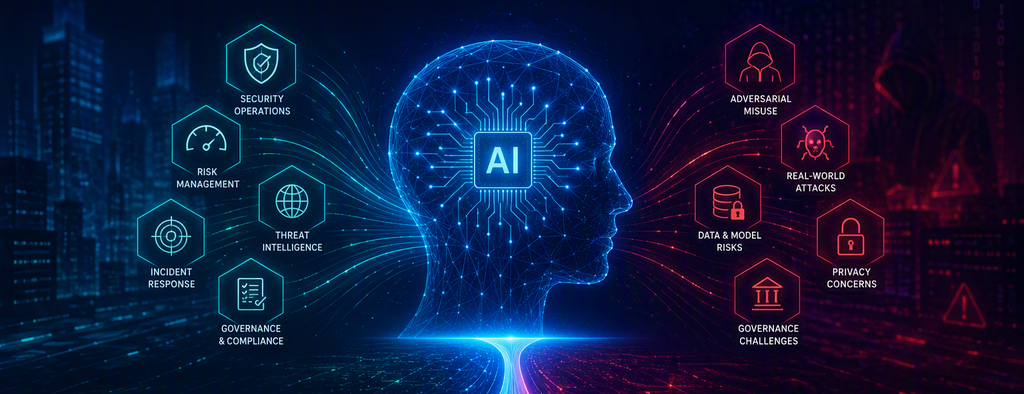
From Copilots to Cyber Agents: Opportunities, Risks and the Future of Generative AI
Crossfunctional
9/3/26, 1:30 PM
-
9/3/26, 2:00 PM
(Europe/Berlin)
(30 minutes)

Prof. Dr. Tobias Häberlein
Professor of Generative Artificial Intelligence and Chair of the Department of Computer Science
at FFHS
Prof. Dr. Tobias Häberlein
Professor of Generative Artificial Intelligence and Chair of the Department of Computer Science
at FFHS
Since May 2022, Tobias Häberlein serves as head of the Department of Computer Science at the FFHS, director of the Business Informatics program, and head of the “AI in Teaching” working group. He is the author of several textbooks on programming and algorithms and has many years of experience in higher education administration, including three years as vice rector for teaching and four years as vice rector for continuing education.
Generative AI has evolved from an assistive tool into an autonomous actor. This talk explores the capabilities of current models, how agentic AI is transforming the way organizations operate, and why context engineering is becoming a critical competency. Beyond productivity gains, the session highlights how security leaders can leverage generative AI to strengthen security operations, governance, risk management, threat intelligence, and incident response capabilities. At the same time, risks are increasing: with advanced models, cyber-related requests require careful safeguards, while recent evaluations have demonstrated how AI systems can move beyond simulation into real-world attack scenarios. In this session Tobias Häberlein examines the implications for security leadership, governance, and cyber defense.